
How to Use Metallic Watercolor
Watercolor is an increasingly popular material, and the market today offers ever more varied and attractive formats. You have probably already seen or heard of watercolor pencils, or even watercolor markers.
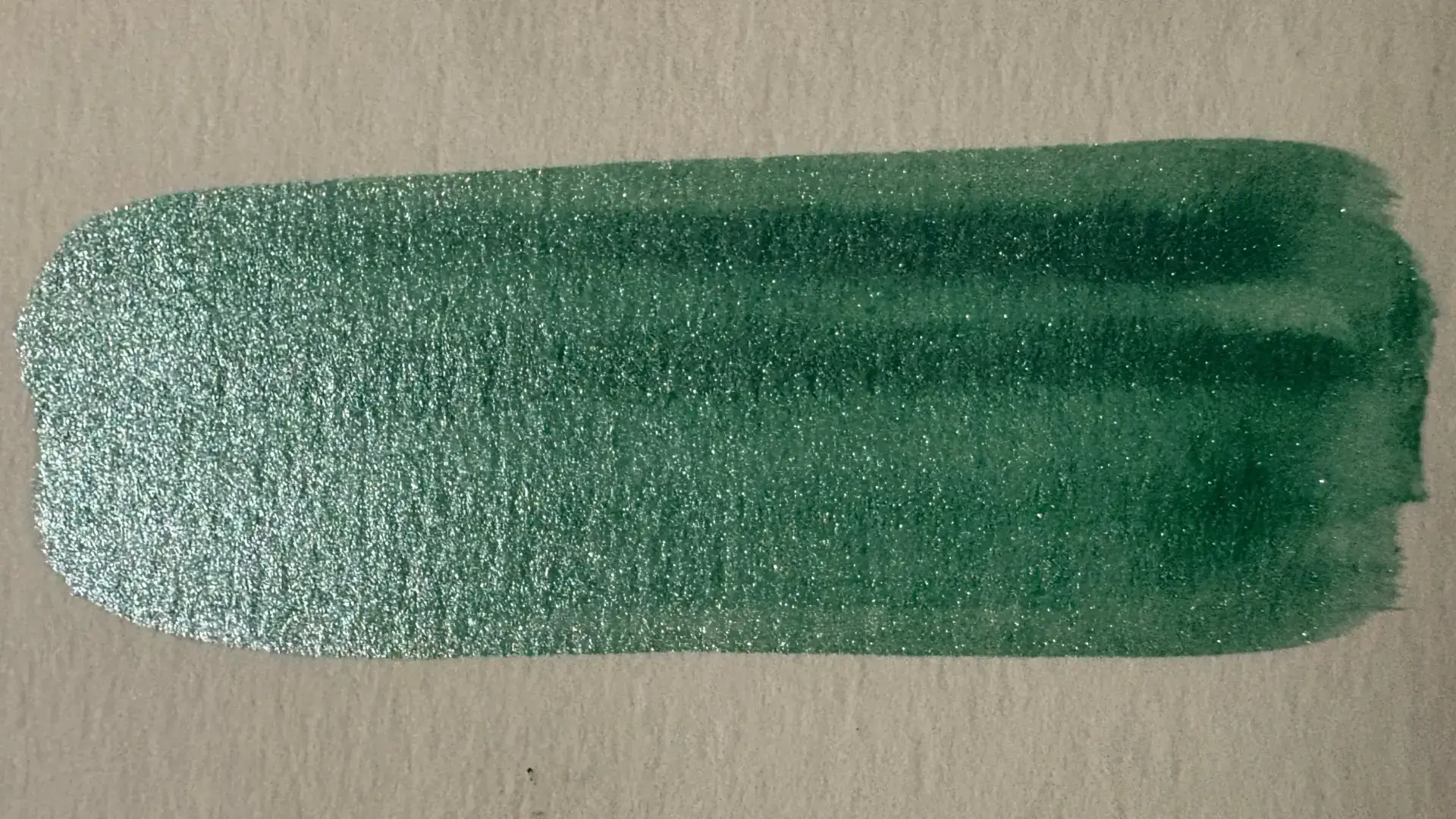
And this is just the beginning: new types of watercolor continue to emerge. Today, we're going to explore metallic watercolor, an original variant that literally shines on its own and allows for bright and very interesting finishes for your paintings.
What is metallic watercolor?
You might be wondering why this type of watercolor looks different. The answer lies in its composition. It starts with gum arabic as a binder, as with conventional watercolor, but in this case, a material called mica is added. This is a mineral characterized by its shimmer, caused by its flaking process, which is facilitated by the composition of the material.
The differences between traditional and metallic watercolor
Even though these two types of watercolor share the same base, their properties differ in several important ways. Understanding these differences will help you better use metallic watercolor in your artworks.
A more opaque watercolor
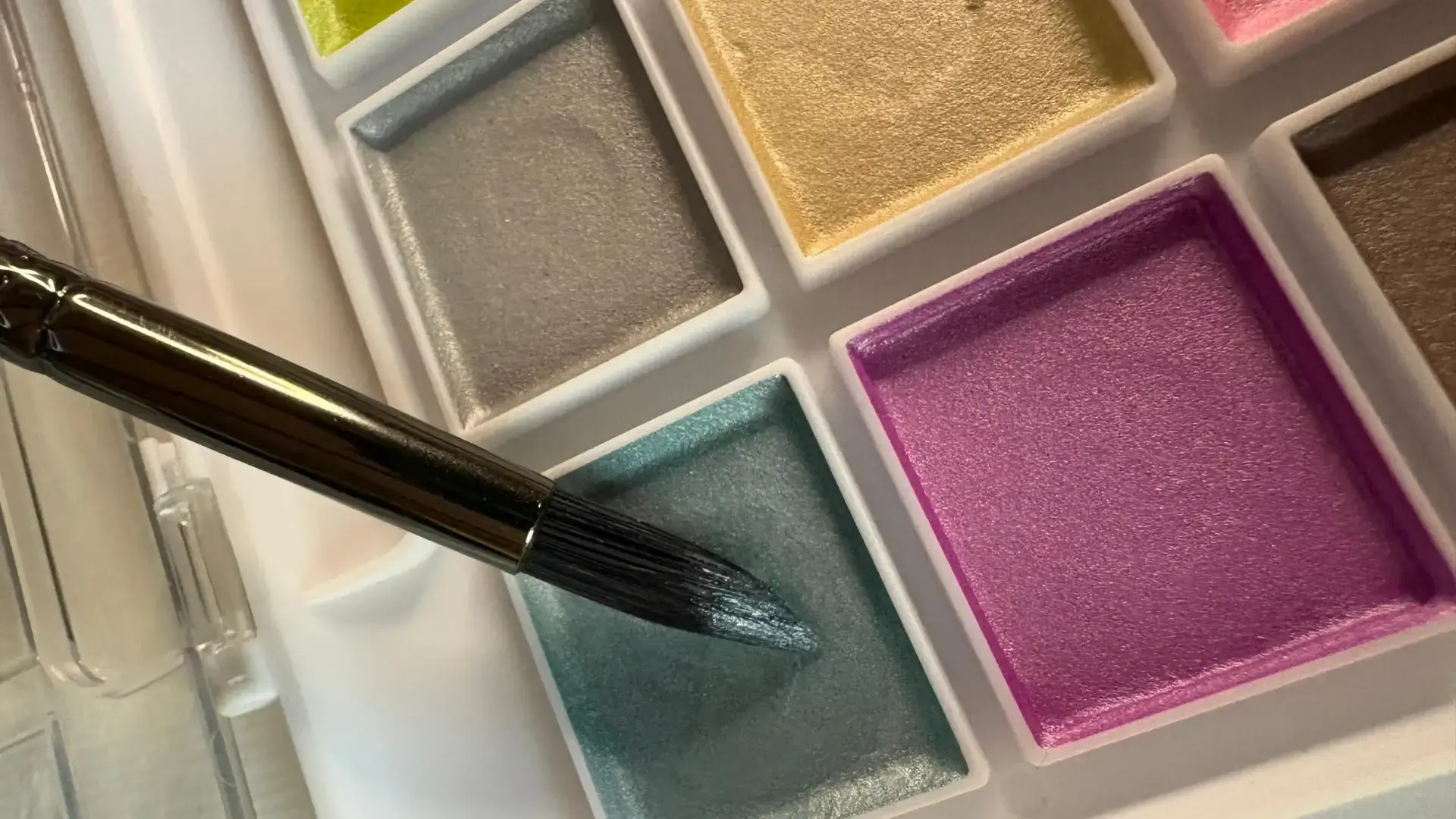
Traditional watercolor is appreciated for its transparency and light washes. Metallic watercolor, on the other hand, offers a more opaque finish. This is due to the presence of mica, which is denser than traditional pigments.
Thanks to this opacity, it becomes easier to cover certain layers or to highlight bright details on dark backgrounds.
More delicate blends
With conventional watercolor, it’s very easy to mix colors to achieve new shades while maintaining good intensity.
Metallic watercolor works a bit differently. Mixes tend to quickly lose their brightness and saturation. To maximize the metallic effect, it is therefore best to avoid mixing the colors too much.
4 tips before starting to use metallic watercolor
Before starting to paint, here are some tips that will help you achieve better results with this material.
Wet the pots before use
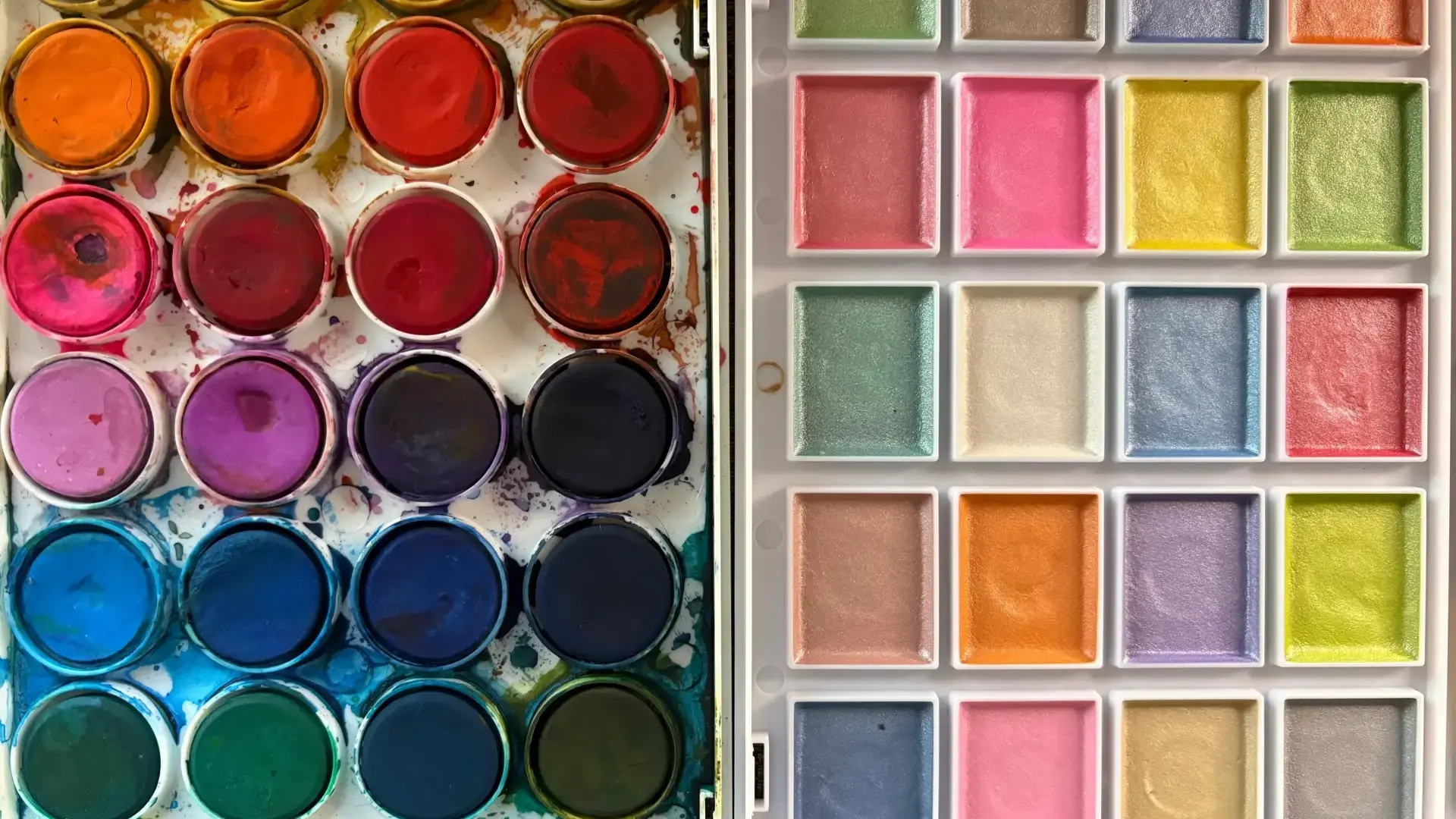
Add a few drops of water to your pans before painting to dissolve the pigment more easily. This will give you a better concentration of color and a more uniform result.
Clean your brushes carefully
Mica can be more difficult to clean than a traditional pigment. Therefore, remember to thoroughly rinse your brushes after use to avoid depositing shiny particles on your other paints.
Reserve the metallic effect for details
Metallic watercolor is particularly effective for highlighting certain elements. It is often best to use it on details or specific areas rather than the entire illustration.
Combine traditional and metallic watercolor
One of the best ways to achieve a harmonious result is to combine classic watercolor with metallic watercolor. This combination allows for interesting contrasts between matte areas and shiny reflections.
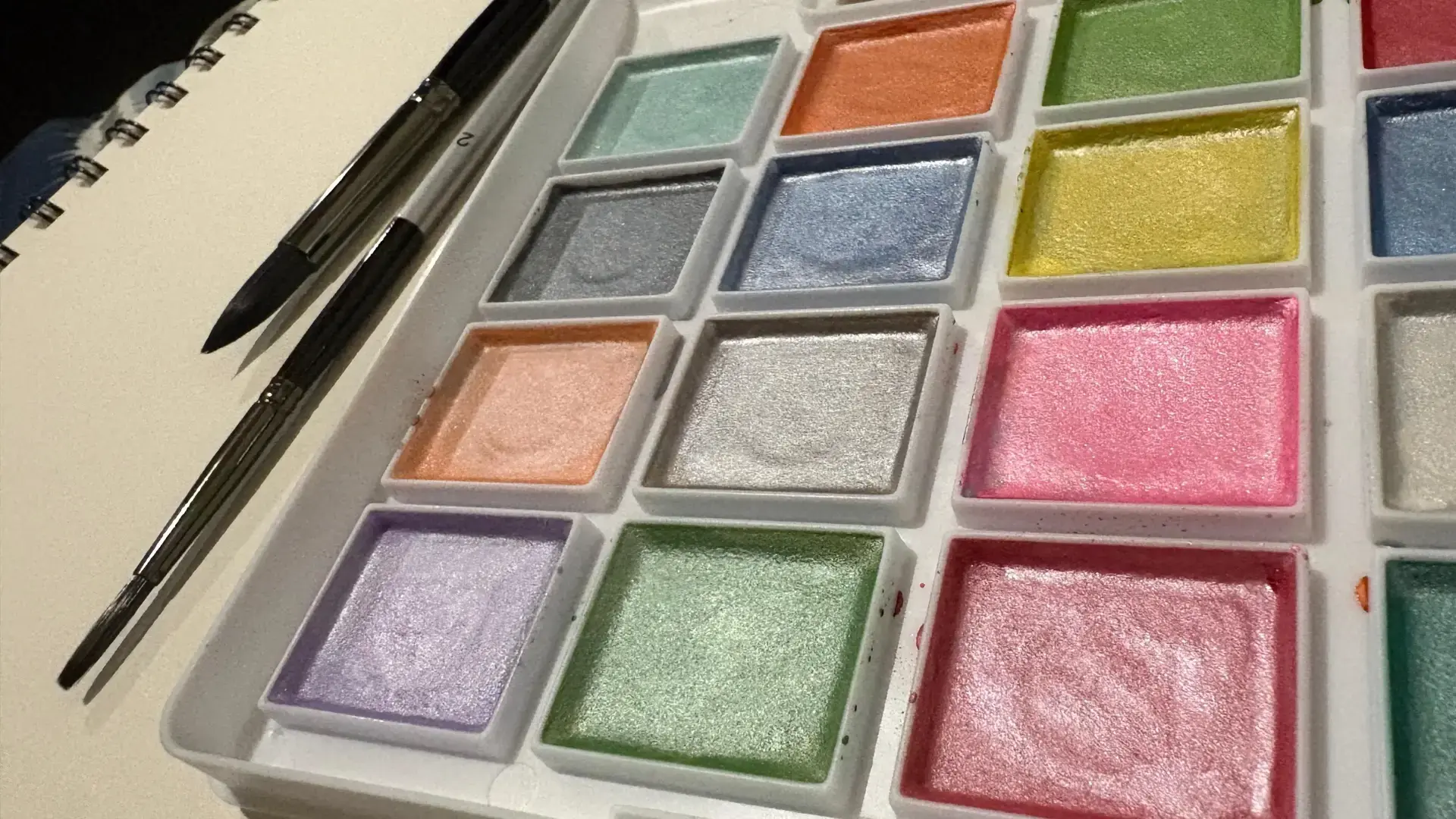
5 exercises for exploring metallic watercolor
Before attempting a complete painting, some simple exercises can help you better understand how to properly use this material.
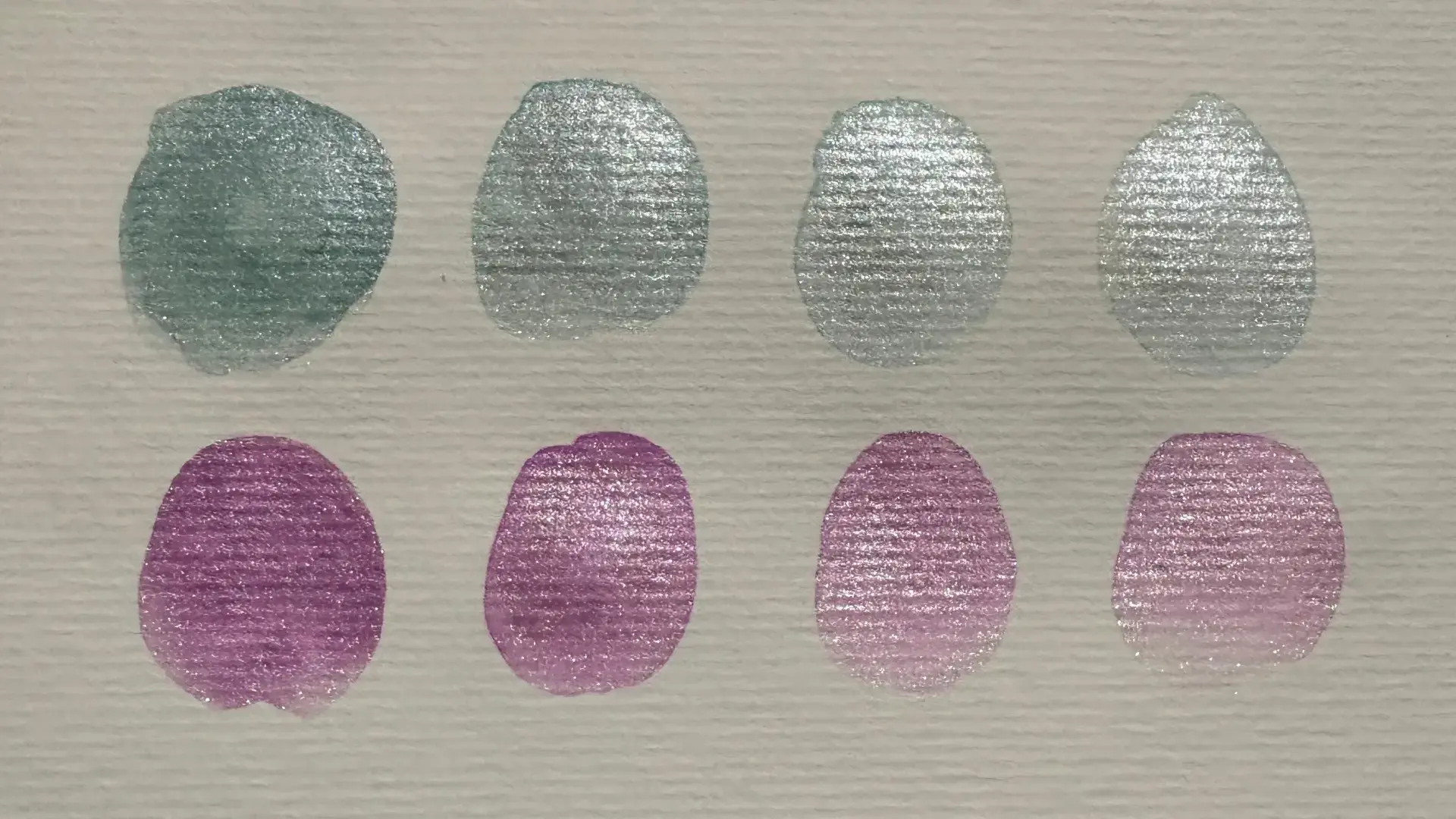
Test different pigment concentrations
Draw several circles on your sheet. Start with a very diluted mix, then gradually increase the amount of pigment while decreasing the water.
This exercise will enable you to observe the variations in intensity and brightness according to the concentration used.
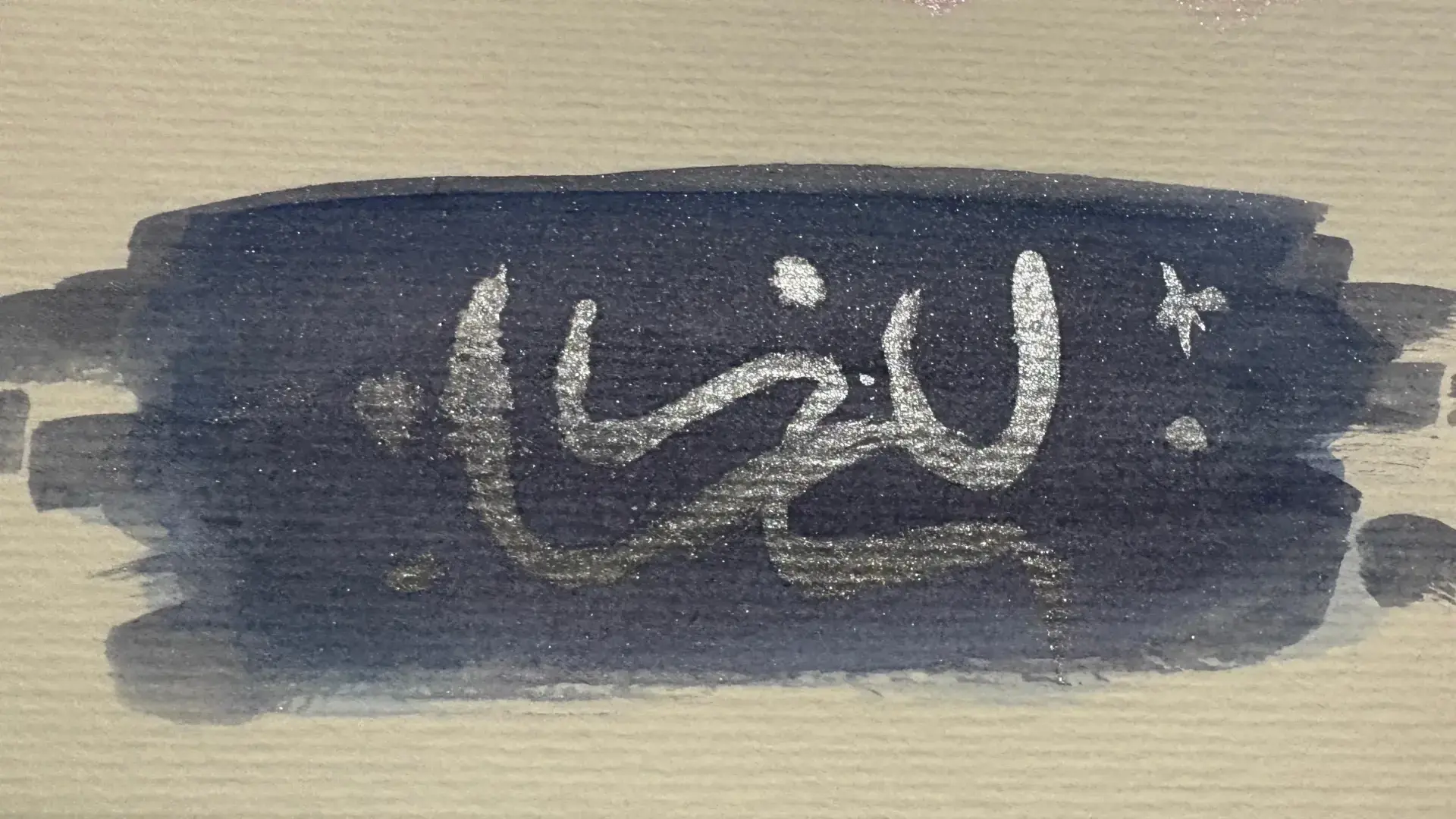
Create contrast on a dark background
Metallic watercolor reveals its full potential on dark surfaces. Try painting on black paper or on a dark background made with ink or traditional watercolor.
You will immediately notice how much more the metallic reflections stand out.
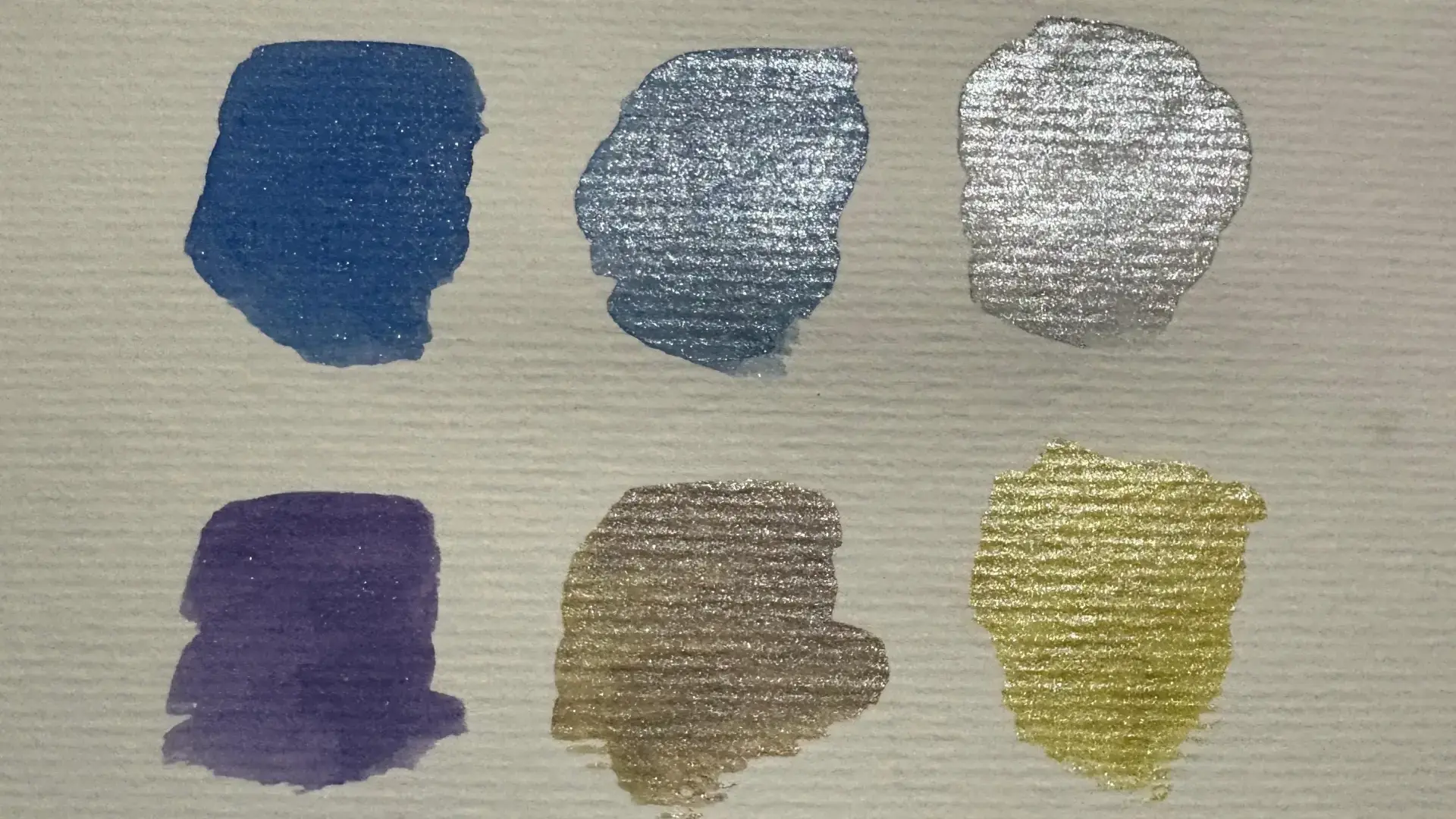
Mixing traditional and metallic watercolor
Create a wash with a dark shade of classic watercolor, such as ultramarine blue, then add a touch of metallic silver watercolor.
You will get a color enriched with subtle and luminous highlights.
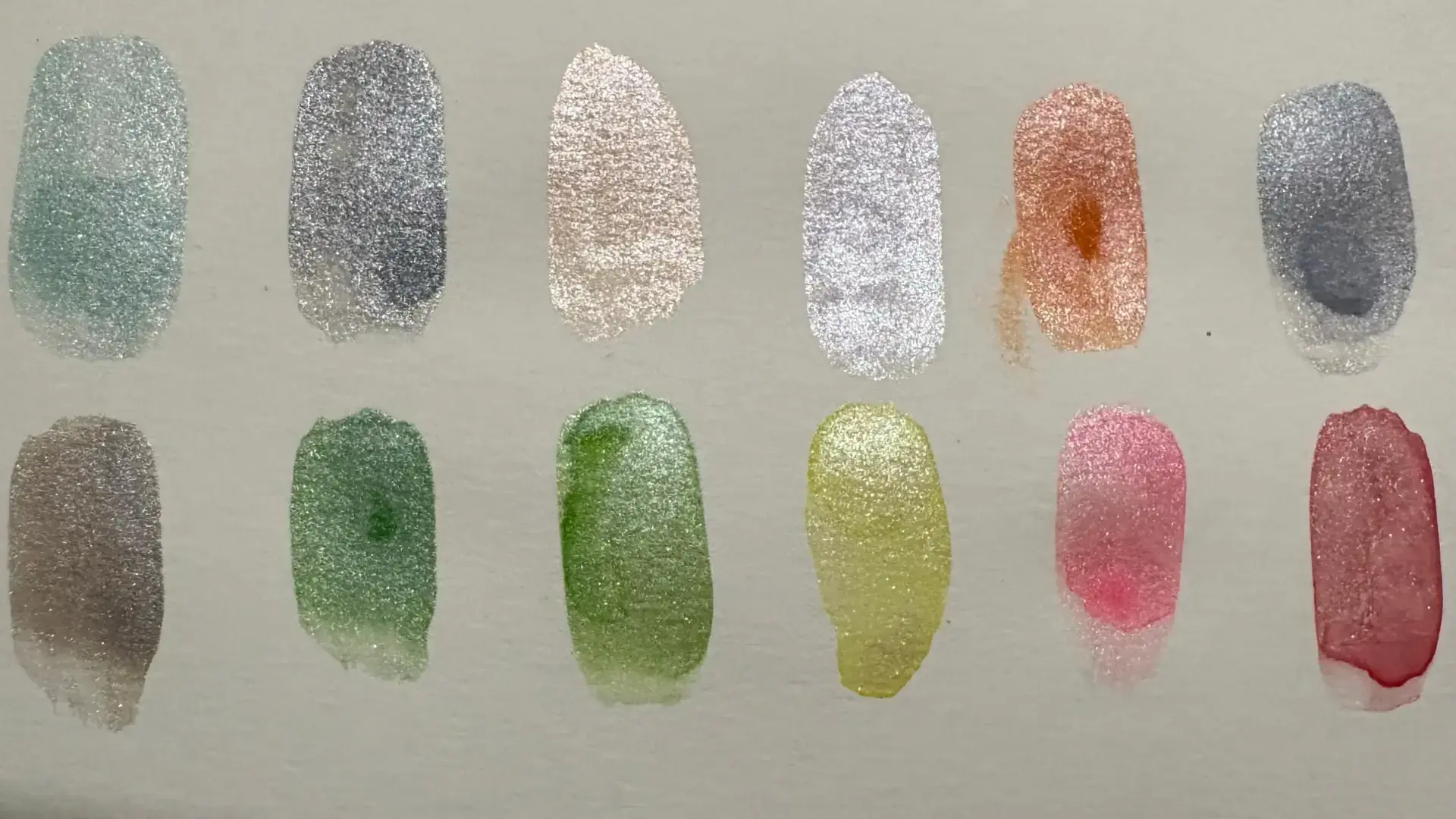
Explore your color palette
Take the time to test each color of your palette on a sheet in order to observe its true hue and pigmentation level once dry.
This exercise is particularly useful with metallic watercolors, whose appearance can vary depending on the light.
Test the wet-on-wet technique
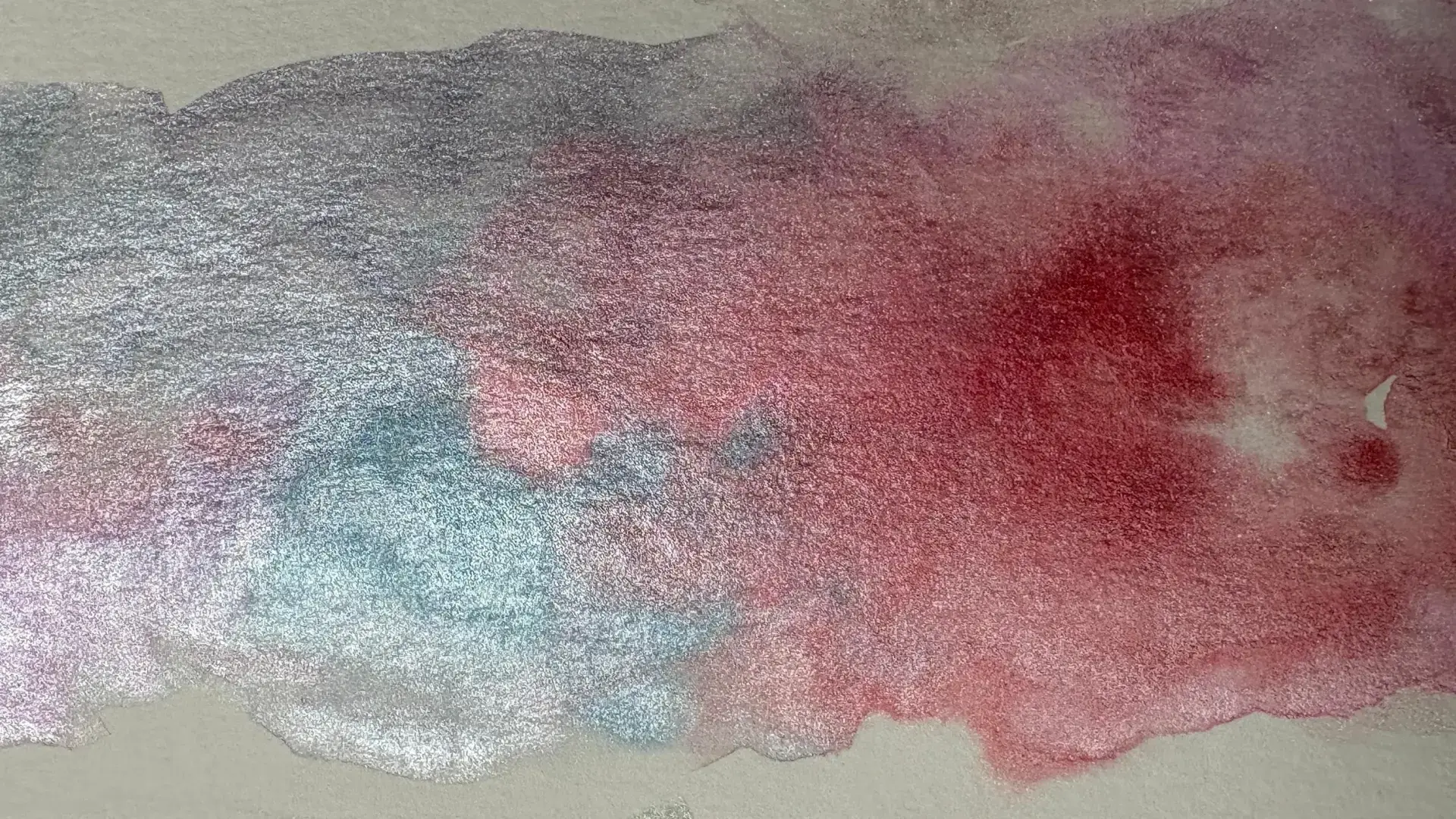
Moisten a part of your sheet with clean water, then apply several metallic colors to the wet area.
Pigments will naturally diffuse and create very interesting effects, similar to colorful luminous clouds.
Create an abstract composition
To conclude, try to create a small abstract composition to put into practice everything you have learned.
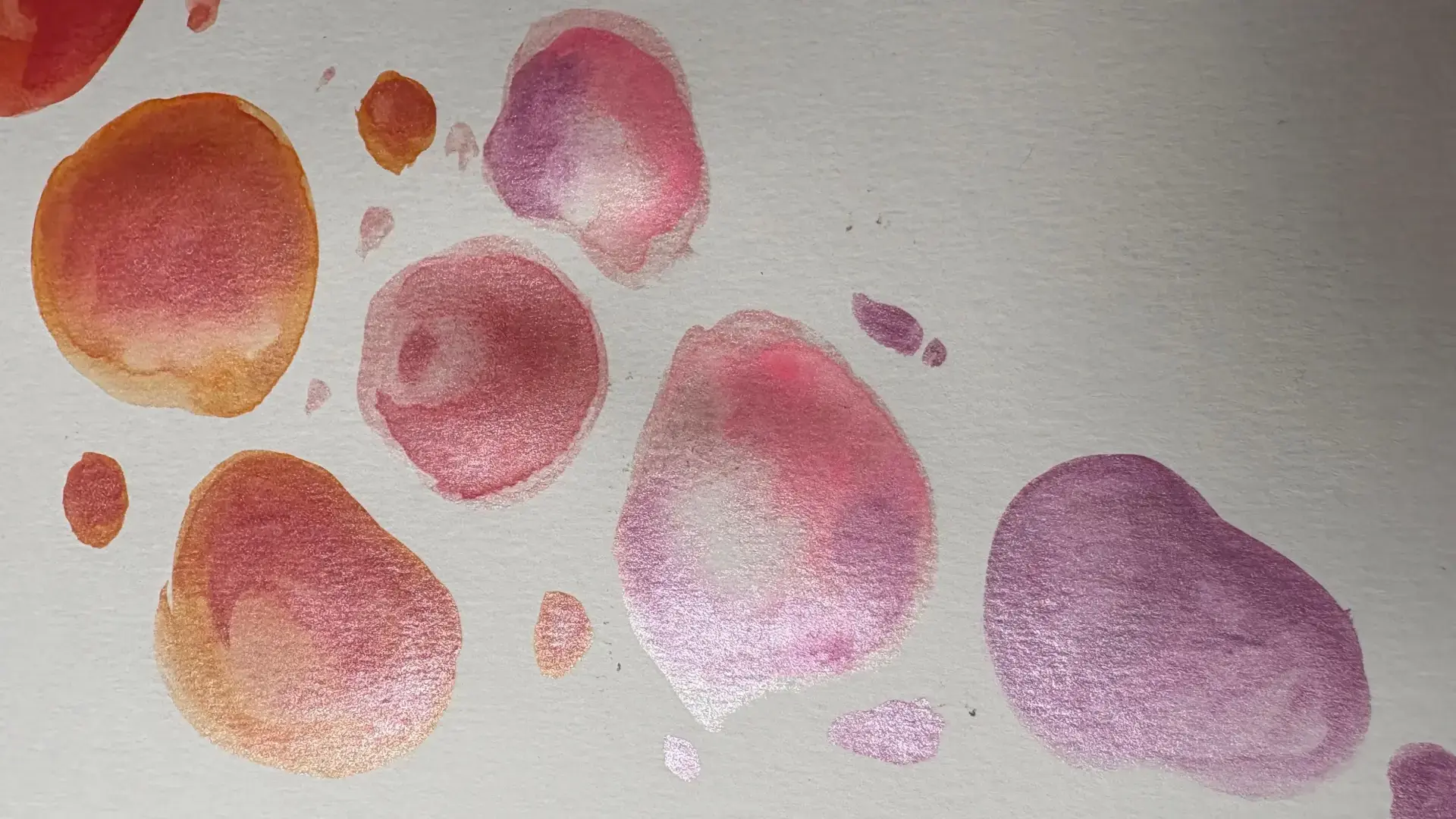
Paint multiple shapes or colored bubbles with shades like pink, orange, purple, or blue. While the paint is still wet, add additional adjacent colors to create gradients and smooth transitions.
Feel free to play with contrasts, add pigment, or remove excess to achieve more depth and light.

In conclusion, metallic watercolor has its own characteristics and does not behave exactly like a traditional watercolor. However, it offers incredible creative possibilities thanks to its luminous reflections and unique rendering.
Used alone or combined with other techniques, it allows you to add an original and elegant touch to your creations. All that remains is for you to experiment, test different effects, and gradually integrate this fascinating material into your artwork.
Discussion
No comments yet.